Best Foldable Phones in 2026
The Short Version
- Best overall: the Samsung Galaxy Z Fold 7 is the thinnest, lightest, best-optimized book-style foldable on the market. It is also $1,999 and its battery is the weakest part of the package.
- Best value book-style: the Google Pixel 10 Pro Fold costs $200 less, lasts longer per Tom's Guide, and is the first book-style foldable with a full IP68 rating.
- Best battery and best flip: the Motorola Razr Ultra (2026) posted the longest independent foldable battery results we could find anywhere — but took a $200 price hike to get there.
- Best budget: the Motorola Razr (2026) at $799.99 is the cheapest way into a folding phone that isn't a compromise on the basics.
Grab your pick: Galaxy Z Fold 7 — $1,999 · Pixel 10 Pro Fold — $1,799 · Razr Ultra (2026) — $1,499.99 · Galaxy Z Flip 7 — around $1,099 · Razr (2026) — $799.99
How We Evaluate Foldable Phones
Loiter Point does not operate a testing lab. We do not own bench equipment, we do not run our own battery rundowns, and we are not going to pretend otherwise. What we do is synthesize published independent measurements from outlets that do run controlled tests — Tom's Guide, PhoneArena, LTT Labs, GSMArena — alongside verified owner reports, and then weigh those results against manufacturer spec sheets.
That has consequences for how you should read this guide. Spec-sheet numbers — battery capacity, display size, folded thickness, weight, charging wattage — are stated plainly, because they come straight off the manufacturer's own documentation. Anything describing real-world behavior is attributed to whoever actually produced the number, and where a figure is derived or estimated rather than lab-recorded, it is labeled "est. real-world" or "reported." You will not see the word "measured" attached to anything we did not source from a lab that measured it.
Battery results in particular are only comparable within a single outlet's own test. Tom's Guide runs a custom screen-on drain test; PhoneArena runs a video-rundown test; PCMark's Battery Life 2.0 is a synthetic workload whose result swings enormously with settings. A 16-hour Tom's Guide number and a 31-hour PhoneArena number for the same phone are not contradictory — they are different tests. We keep them labeled rather than blending them into a fake average.
Foldables also carry evidence gaps that slab phones don't. Long-term hinge and crease durability is genuinely hard to assess in a review cycle, third-party drop and abuse tests are entertaining but methodologically loose, and retail availability for some models is a mess. Where reviewers disagree or the evidence is thin, we say so in the pick itself rather than smoothing it over. If you want the broader field, our best smartphones and best Android phones guides cover the non-folding options.
1. Samsung Galaxy Z Fold 7 — Best Overall
 Click to zoom
Samsung Galaxy Z Fold 7
The Fold 7's headline achievement is physical. At 9.2mm folded it sheds nearly 3mm off the Fold 6, and at 215g it is 24g lighter, which is the difference between a phone that feels like a folding gadget and one that feels like a phone. That matters more than any single feature, because thickness and weight are what historically made book-style foldables a compromise rather than a default choice.
Software is the second reason it tops this list. Samsung's large-screen app optimization is still the strongest of any foldable — more apps behave correctly on the 8-inch inner panel, multi-window is less fussy, and fewer things stretch badly when you unfold mid-task. The 200MP main sensor with the Pro-Visual Engine also puts it in genuine flagship camera territory rather than "good for a foldable" territory; see our best camera phones guide for how that class of sensor performs generally.
Reviewers were not unanimous. Tom's Guide framed it as the first foldable they would actually buy, which is a meaningful shift in tone from that outlet. CNN Underscored was noticeably more mixed, landing on a "wish I loved it more" verdict. Both can be true: the hardware is a real leap, and $1,999 is a lot of money for a phone whose battery result went up by 20 minutes.
The catch: battery is the weak point. Tom's Guide's custom battery test recorded 10h55m, versus 10h35m for the Fold 6 — essentially flat generation-over-generation, and below what the Pixel 10 Pro Fold manages for $200 less. It is also the most expensive mainstream phone you can buy in the US, though it has been discounted by roughly $300 at times.
Check price on Amazon2. Google Pixel 10 Pro Fold — Best Value Book-Style
 Click to zoom
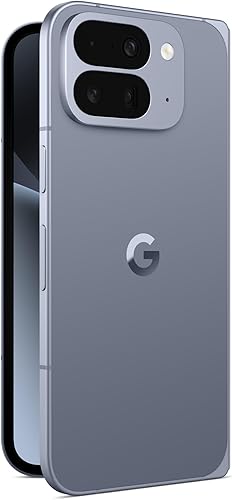
Google Pixel 10 Pro Fold
The IP68 rating is the genuinely new thing here. Book-style foldables have historically offered water resistance without full dust protection, because a hinge is a hard thing to seal against particulates. The Pixel 10 Pro Fold is the first of its kind to carry the complete rating, and for anyone who has watched grit work its way into a hinge over a year of pocket time, that is not a marketing bullet — it is the difference between a phone that ages and one that degrades.
Battery is the other argument. Tom's Guide's results put it ahead of the Z Fold 7 while costing $200 less at list. Independent PCMark Battery Life 2.0 runs cited around 23h18m with adaptive brightness and limited background sync, dropping to 14h42m with 120Hz forced on both screens plus Bluetooth audio and location running. That spread is worth internalizing: it is the same phone, and the settings you choose move the result by roughly nine hours. LTT Labs separately confirmed Google's 50%-in-30-minutes charging claim, which is one of the few charging claims in this category that has been independently verified rather than repeated. Our best phones for battery life guide goes deeper on how these test protocols differ.
The honest counterweight is that this is not a reinvention. 9to5Google's long-term review called it an iterative update, and that is a fair read — the 5x telephoto and the sealing are refinements on a platform Google already had. It has also been seen at $1,399 on Amazon per deal listings, though we would not treat that as the current price; check before you buy.
The catch: iterative rather than transformative, and the list price is still $1,799. Google's app optimization on the inner display remains a step behind Samsung's.
Check price on AmazonNerd box: the Pixel abuse-test fire, and what IP68 actually covers
GSMArena reported that a Pixel 10 Pro Fold's battery ignited during a third-party extreme durability test. It is worth being precise about what that is and isn't. These are destructive stress tests — deliberate bending, puncturing, crushing, and heat application designed to find the failure point of a device. Every lithium-ion battery has a failure point, and reaching it under deliberate abuse is the expected outcome of the test, not a finding about the product. It is not evidence of a defect in normal operation, and we have seen no reports of comparable incidents from ordinary use.
The related confusion is what an IP rating buys you on a folding phone. IP68 covers dust ingress and immersion in fresh water to a specified depth and duration under lab conditions. It does not cover salt water, pressurized water, soap, or the gradual degradation of seals over years of hinge cycles. It says nothing at all about drop resistance, and nothing about crease behavior. A foldable's crease is a consequence of repeatedly bending a laminated display stack — it becomes more visible over time on every foldable, and no manufacturer rates it. Hinge cycle counts quoted in marketing come from the manufacturers' own rigs, not from independent labs, and should be read as directional rather than verified.
3. Motorola Razr Ultra (2026) — Best Battery / Best Flip
 Click to zoom
Motorola Razr Ultra (2026)
If battery life is the thing you actually care about, this is the foldable. Tom's Guide's battery drain test recorded 16h20m of screen-on time — the longest of any foldable in their results, by a wide margin over both book-style picks above. PhoneArena's video-rundown test recorded 31 hours flat, putting it ahead of the Pixel 10a at 28:04 and even the Galaxy S26 Ultra at 30:03. Two different outlets, two different protocols, same conclusion. That is about as clean an evidence picture as this category produces.
The 4.0-inch external display is the other reason to want it. It runs full apps rather than glorified widgets, which is what makes a flip phone genuinely usable folded rather than a novelty you have to open constantly. Pair that with a Snapdragon 8 Elite, 16GB of RAM, 512GB of storage and 68W TurboPower charging, and the spec sheet is flagship in every dimension that isn't the price.
Which brings us to the disagreement. This is a $200 price hike over the 2025 model for what most reviewers considered modest change. Engadget's verdict was blunt — "too much for too little." Android Authority liked the phone but hesitated to recommend it at the price. We rank it third on evidence, not on enthusiasm: the battery results are real and best-in-class, and the value argument is genuinely contested. If it were $1,299 there would be no argument at all.
The catch: the price increase is hard to justify against the 2025 model, and it isn't carried by Verizon, AT&T or T-Mobile — you buy it unlocked or not at all. No carrier financing, no trade-in promos through your provider.
Check price on Amazon4. Samsung Galaxy Z Flip 7 — Best Flip for Samsung Users
Samsung Galaxy Z Flip 7
The Z Flip 7 earns its place for a specific buyer: someone already inside Samsung's ecosystem who wants a clamshell rather than a book-style fold. The 6.9-inch inner AMOLED is a large canvas for a flip, and FlexCam — propping the phone half-open to shoot hands-free at odd angles — remains one of the few foldable features that changes how you actually use a camera rather than just how the phone looks. The triple-camera setup and Samsung's software integration with Galaxy wearables and tablets are the real draw.
We are ranking this one on a thinner evidence base than the picks above, and we would rather say that than pad it out. We did not find independent controlled battery results for this model on the same footing as the Tom's Guide and PhoneArena numbers cited elsewhere in this guide, so we are not going to quote a runtime figure. If battery life is your priority in a flip, the Razr Ultra has the measurements behind it and this does not, at least not yet.
There is also a retail problem you need to know about. No clean new-condition US-model Amazon listing was verified for this phone at the time of writing. Amazon listings for the Z Flip 7 are mostly international variants or renewed units, both of which carry real consequences: international models may lack US carrier band support and US warranty coverage, and renewed units have unknown hinge cycle history on a device whose hinge is the wear item. Read the listing carefully and confirm you are getting a US model before you commit.
The catch: availability. Verify the listing is a new US model, not an import or a refurb. And note we have no independent battery measurement for it.
Search listings on Amazon5. Motorola Razr (2026) — Best Budget Foldable
 Click to zoom
Motorola Razr (2026)
At $799.99 this is the cheapest folding phone you can buy, and it sits well under the Galaxy Z Flip 7's roughly $1,099. That price gap is the entire argument, and it is a strong one. Foldables have spent years being a $1,500-plus proposition; the Razr (2026) is the model that makes the form factor available at the price of a good conventional flagship. If you have been curious about a flip phone but not $1,500 curious, this is the entry point.
The upgrades are modest and Motorola is not really pretending otherwise. The battery moves from 4,500mAh to 4,800mAh, which is a genuine if small improvement, and the chipset goes from the Dimensity 7400X to the 7450X — a minor step that reviewers consistently note you will not notice in daily use. The design is essentially unchanged from the 2025 model. This is a spec refresh, not a new phone.
Reviewers largely agree on where it lands. Android Central called it still the best budget flip phone you can buy. BGR was more pointed: the only foldable worth getting at this price. Neither is claiming it competes with the Razr Ultra on performance, and neither should. If you are shopping this bracket generally, our best phones under $1,000 guide covers the non-folding alternatives at the same money.
The catch: a mid-tier chipset and a design carried straight over from last year. If you already own the 2025 Razr there is no reason to upgrade.
Check price on AmazonComparison
| Phone | Price | Form factor | Inner / cover display | Battery capacity | Headline independent battery result | Standout |
|---|---|---|---|---|---|---|
| Galaxy Z Fold 7 | $1,999 | Book-style | 8.0" / 6.5" | Not stated in our sources | 10h55m — Tom's Guide custom battery test | 9.2mm folded, 215g; best large-screen app support |
| Pixel 10 Pro Fold | $1,799 list | Book-style | Not stated in our sources | Not stated in our sources | 23h18m best case / 14h42m worst case — PCMark Battery Life 2.0 | IP68; 50% in 30 min confirmed by LTT Labs |
| Razr Ultra (2026) | $1,499.99 | Flip | Not stated / 4.0" app-capable | 5,000mAh | 16h20m — Tom's Guide drain test; 31h00m — PhoneArena video rundown | Longest foldable battery results in both tests |
| Galaxy Z Flip 7 | Around $1,099 | Flip | 6.9" AMOLED / not stated | Not stated in our sources | None found — evidence gap | FlexCam and Samsung ecosystem fit |
| Razr (2026) | $799.99 | Flip | Not stated in our sources | 4,800mAh | None found — evidence gap | Cheapest foldable on sale |
Blank cells are honest gaps, not omissions — where our sources did not state a figure, we have not filled it in. Battery results are only comparable within the same outlet's test protocol.
Bottom Line
If you want the best book-style foldable and price is not the deciding factor, the Galaxy Z Fold 7 is it. The thinness and weight reduction are the biggest single-generation physical improvement this category has seen, and Samsung's large-screen software remains the reason to pick a book-style fold over a big slab in the first place. Go in knowing the battery is flat versus the Fold 6 and that you are paying $1,999 for it.
For most people the Pixel 10 Pro Fold is the smarter purchase. It costs $200 less, it lasts longer per Tom's Guide, its charging claim has been independently verified by LTT Labs, and it is the first book-style foldable rated IP68. It is an iterative update, as 9to5Google said — but the things it iterated on are the things that determine whether a foldable survives three years in your pocket.
If you want a flip, the split is clean. The Razr Ultra (2026) has battery results nothing else in this guide comes close to, and a 4.0-inch external screen that makes the closed phone genuinely useful — but Engadget and Android Authority are both right that $1,499.99 is a lot for the generational change, and you will be buying it unlocked. The Razr (2026) at $799.99 is the one to buy if you mainly want to find out whether you like flip phones. And the Galaxy Z Flip 7 is for committed Samsung users specifically — check the listing is a new US model before you buy, and understand we are ranking it without an independent battery figure to lean on.
One last framing. Foldables in 2026 are no longer experimental, but they are still more expensive, more mechanically complex and less durable in the long run than equivalent slab phones. If none of the specific advantages above — the 8-inch canvas, the pocketable clamshell, FlexCam — are things you will actually use weekly, a conventional flagship will serve you better for less money. Our Galaxy S26 Ultra review is a reasonable place to start that comparison.