Buying Guide
Best Phones Under $500 (2026)
Updated July 2026 · Loiter Point Editorial · 5 picks · evidence-ranked
The Short Version
- Buy the Google Pixel 10a unless you have a specific reason not to. GSMArena's Active Use Score puts it at 15:13h — the highest number we found for any phone in this price band, and roughly two and a half hours ahead of the Pixel 9a it replaces. Seven years of Pixel Drops, IP68, $499 list and frequently less.
- Want optical zoom reach? The Nothing Phone (3a) Pro is the only phone on this list with a real periscope telephoto. Almost nothing else under $500 has one. GSMArena's Active Use Score: 13:37h.
- Under $300, durability wins. The Moto G Power (2026) carries IP68 and IP69 plus MIL-STD ratings and Gorilla Glass 7i at $299.99 — a spec combination that normally costs three times as much.
- There is no new iPhone under $500 in 2026. Apple's cheapest current model, the iPhone 17e, starts at $599. If your budget is hard-capped at $500 and you want iOS, your only route is refurbished or used, and that's a different article.
How We Evaluate Phones Under $500
Loiter Point does not run a lab. We have never plugged a phone into a spectrophotometer and we are not going to pretend otherwise. What we do is read the outlets that do run labs — GSMArena, Tom's Guide, PhoneArena — pull their published figures, and put them side by side so you can see which claims have measurements behind them and which are press-release copy.
That distinction matters more in this price band than anywhere else. Under $500 the spec sheet is doing most of the marketing work, and the gap between a rated number and an independently measured one gets wide. A phone rated for "800 nits typical" may come back from a lab at 737. A phone advertising "60x zoom" may have optical reach that stops at 3x. Neither of those is fraud, exactly, but you should know which number you're buying.
So the ranking below leans on four things, in this order:
- Independently measured endurance. Battery is the single spec that most reliably determines whether you like a cheap phone six months in. We prefer GSMArena's Active Use Score because it is a consistent composite across their whole test set, which makes cross-phone comparison honest.
- Independently measured display behaviour. Specifically brightness, because that's what fails you outdoors and it's the spec most often quoted as a rated peak nobody reaches.
- Software support horizon. A $500 phone with three years of updates is more expensive over its life than a $500 phone with seven.
- Durability ratings that are actually certified — IP ratings and MIL-STD, not "premium build."
Price does not affect the order. The cheapest phone here is $199 and it ranks fifth because the evidence puts it fifth, not because of what it pays. Two of the five picks are the most expensive things on the list and two are the least.
The Five Picks
 Click to zoom
Best overall
1Google Pixel 10a
$499 (128GB) · $599 (256GB) · widely discounted — Android Authority reported a $399 Amazon low during Prime Day 2026
The Pixel 10a launched on 18 February 2026 and started shipping 5 March at $499. On paper it is a modest update: same Tensor G4 as the Pixel 9a, same 5,100mAh cell, a flat back, a slightly brighter screen. On the bench it is not modest at all. GSMArena's Active Use Score came back at 15:13h against the Pixel 9a's 12:42h. TechAdvisor's PCMark for Android run went 20h 24m against the 9a's 14h 11m. Those are two different labs, two different methodologies, and the same direction of travel by a wide margin.
Everything else about the phone is the familiar A-series proposition, which by 2026 is a very good one. Seven years of Pixel Drops means a phone bought today is still receiving platform updates in 2033. IP68 is full dust-tight and submersion-rated, which is not universal at this price. The 48MP main camera continues to punch far above what the sensor hardware suggests, because Google's computational stack is still the reason to buy an A-series Pixel.
The honest counterweight is the chip. Tensor G4 was not a fast processor when the Pixel 9a shipped and it has not become one. If you play demanding games or care about sustained performance, the Snapdragon in the Nothing phones below will feel quicker. For everything else — messaging, maps, camera, browsing, all-day use — the Pixel is the one we'd hand a friend without a follow-up question.
- No telephoto lens at all. If you photograph anything more than a few metres away, pick #2.
- Tensor G4 is a two-generation-old midrange chip; sustained gaming performance is the weak spot.
- 30W wired charging is fine, not fast. The ~56% in 30 minutes figure comes from a single reviewer, not a lab panel — treat it as indicative.
- The 256GB tier at $599 breaks this article's budget. Buy the 128GB and a cloud plan.
Here is the part of the Pixel 10a story that should make you slightly suspicious, and that we'd rather print than smooth over.
The 10a gained roughly two and a half hours of Active Use Score over the 9a while running identical silicon (Tensor G4) and an identical battery capacity (5,100mAh). Large endurance gains normally come from a node shrink, a bigger cell, or both. Neither applies here. The result itself is well-replicated — GSMArena and TechAdvisor got there independently on different tests — so we're confident the phone really does last longer. The cause is where the evidence runs out.
GSMArena's own review offers a guess rather than a finding: they write that it is "probably a new, more power-efficient display panel." That's plausible, and Google's claim of an 11% brighter Actua panel does imply a panel change. The broader reviewer consensus leans on software and power-management tuning. But nobody we read has isolated the mechanism with instrumentation — no panel-level power draw comparison, no teardown confirming a different emitter stack. Google has not published one either.
So: strong, replicated outcome; unconfirmed cause. That's a fine reason to buy the phone and a bad reason to assume the same gain will show up on the next Tensor device.
 Click to zoom
Best zoom under $500
2Nothing Phone (3a) Pro
12GB + 256GB · ~$459 at launch pricing — verify current listing before buying
Optical zoom is the thing budget phones cut first, and it's the cut you notice hardest, because digital crop on a small sensor falls apart the moment light gets difficult. The Phone (3a) Pro is the exception: a genuine 50MP periscope telephoto in a sub-$500 body. There is very little else in this bracket that offers real optical reach, and if you shoot kids' sports, live music, wildlife or architecture, that single component is worth more than every other difference on this page.
The battery holds up too. GSMArena's Active Use Score of 13:37h is a solid second-place finish here — and worth noting, GSMArena themselves described it in measured terms as "solid, even if not overly impressive," which is a more useful summary than anything we could write. It also beats the Galaxy A56 below on the same test, which is why it ranks above it.
Now the caveat we're contractually obliged to ourselves to print. Nothing markets this camera as "60x ultra zoom." The optical reach of the periscope is a small fraction of that; everything beyond it is digital crop and upscaling. This is the same class of claim as the Pixel's 100x Pro Res Zoom, which our flagship guide treats as generative reconstruction rather than photography — the phone is inventing plausible detail, not resolving it. Judge the 3a Pro on its optical range, which is genuinely good for the money, and treat the 60x figure as a marketing number.
- IP64 only. That is splash resistance, not submersion. The Pixel 10a and both Motorolas are rated higher.
- "60x ultra zoom" is overwhelmingly digital. The useful optical range is far shorter.
- Ships on Android 15, a version behind the Pixel and Motorolas here.
- US availability has historically been awkward — Nothing ran a US beta programme rather than a normal retail launch. Confirm the seller and warranty terms on the listing.
 Click to zoom
Best display and ecosystem
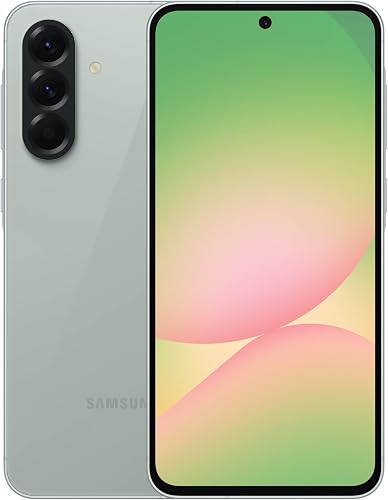
3Samsung Galaxy A56 5G
$499.99 list · street estimate roughly $385–$450 — 9to5Toys reported a $384.99 Amazon low in April 2026
The A56 is the sensible-shoes pick, and the display is why. Samsung's mid-range AMOLED panels remain the best-looking screens at this price, and 6.7 inches at 120Hz is a lot of glass for under $450 street. The Samsung software ecosystem is also a genuine argument if you already own a Galaxy Watch or Buds — pairing and handoff simply work in a way third-party Android does not always match.
On endurance it is the weakest of the top three. GSMArena's Active Use Score came in at 12:08h, which they noted was actually down on the previous generation, with lower gaming and video playback runtimes. In their comparison set the A56 landed around average for its price class — behind the OnePlus Nord 4 and the Nothing Phone (3a) Pro, ahead of the Xiaomi 14T and Motorola Edge 50 Pro. That is a fair result, not a bad one, but it's the reason this phone sits third rather than first.
Where it wins outright is charging. GSMArena measured 65% in the first 30 minutes on a 45W Samsung charger and a full 0–100% in about 1 hour 13 minutes — comfortably the fastest refill on this list, and fast charging is worth more day to day than the hour of screen-on time it gives up to the Nothing.
A note on buying this one: Amazon carries a large number of international and import A56 listings that do not come with US manufacturer warranty coverage. The ASIN we've linked is a US-warranty 128GB unit; there is also a 256GB US-warranty variant (B0FB48FP3N). If the listing you land on looks ambiguous about warranty or region, search the unlocked US listings directly and check the seller before you buy.
- Endurance regressed versus the previous generation on GSMArena's test — 12:08h is last place among our top three.
- Street pricing is volatile. It has listed anywhere from $384.99 to the full $499.99 within 2026, so the "under $500" claim depends on when you buy.
- Import and grey-market listings are common on Amazon; warranty coverage varies.
- IP67 rather than IP68 — a small step down from the Pixel and the Moto G Power.
 Click to zoom
Best durability under $300
4Motorola Moto G Power (2026)
$299.99 MSRP · unlocked, 8GB + 128GB
The durability spec on this phone is the whole argument, and it is a strong one. IP68 covers dust ingress and submersion. IP69 additionally covers high-pressure, high-temperature water jets — that is a rating you normally find on industrial and rugged handsets, not on a $300 consumer phone from a mainstream brand. Add MIL-STD drop testing and Gorilla Glass 7i and you have a phone that is meaningfully harder to destroy than anything else here, including the $499 Pixel.
Everything else is competent rather than remarkable, and PhoneArena's review is worth reading in full because it declines to oversell. Their in-house battery estimate came out at 7 hours 7 minutes, built from 18h 12m of browsing, 9h 37m of video and 9h of gaming. Their own summary is that the scores are decent but "this is not the battery beast Motorola was once known for making" — in practice a solid one-day phone. Charging measured 53% in 30 minutes and a full cycle in 1 hour 9 minutes, which sits a little under Motorola's rated "up to 90% in just under an hour."
Note that PhoneArena's battery estimate and GSMArena's Active Use Score are different methodologies and should not be compared directly — that's why the table below keeps them in separate columns rather than pretending they're one scale.
- PhoneArena's measured charging (53% in 30 min) falls short of Motorola's rated TurboPower claim.
- Battery life is good, not category-leading — reviewers describe a comfortable one-day phone, not a two-day one.
- No optical zoom.
- Motorola's update commitment is far shorter than Google's seven years.
 Click to zoom
Best under $200
5Motorola Moto G (2026)
$199 · unlocked, 4GB + 128GB
Tom's Guide headlined their review "The best phone for less than $200," and the number underneath that headline is the reason it's here: their standard battery drain test returned 19 hours 11 minutes, which they described as the longest result they had recorded for any budget phone they'd tested. That is a specific, methodologically consistent figure from an outlet that runs the same test across its whole review catalogue, and it is a genuinely startling result for a $199 device.
Reviewers were also warmer than expected on the cameras — Tom's Guide called them "pretty good for such a low-cost handset" — and on basic reliability, with one reviewer noting the phone never froze across two weeks of use. AndroidHeadlines and PhoneArena both came away positive. For a first phone, a spare, a work phone, or a parent who wants something that just rings, this is an easy recommendation.
But be clear-eyed about the display. A 6.7-inch panel at 1604×720 is a low-resolution LCD by any 2026 standard, and Tom's Guide were blunt about it: the resolution is "genuinely painful if you care about display quality," with wider-than-usual bezels and — the bigger issue — a panel that simply isn't very bright. If you read outdoors, this is not your phone. And 4GB of RAM will constrain multitasking today and will constrain it more in two years.
- 720p-class LCD on a 6.7" panel. Reviewers rated it dim as well as low-resolution.
- Only 4GB of RAM — this is the spec most likely to make the phone feel old first.
- Entry-level Dimensity 6300; fine for messaging and video, not for demanding apps.
- Tom's Guide specifically warn about buying the right variant — check the model number on the listing.
Side by Side
| Phone | Price | Endurance (source) | Display | Durability | Optical zoom |
|---|---|---|---|---|---|
| Pixel 10a | $499 | 15:13h Active Use (GSMArena) 20h 24m PCMark (TechAdvisor) |
6.3" Actua | IP68 | No |
| Nothing Phone (3a) Pro | ~$459 | 13:37h Active Use (GSMArena) | 6.77" 120Hz AMOLED | IP64 | Yes — periscope |
| Galaxy A56 5G | ~$385–500 | 12:08h Active Use (GSMArena) | 6.7" 120Hz AMOLED | IP67 | No |
| Moto G Power (2026) | $299.99 | 7h 07m estimate (PhoneArena) different scale — not comparable to Active Use |
FHD+ 120Hz | IP68 + IP69, MIL-STD | No |
| Moto G (2026) | $199 | 19h 11m drain test (Tom's Guide) different scale again |
6.7" LCD 1604×720 | Not specified | No |
Endurance figures come from three different labs running three different protocols. GSMArena's Active Use Score is a composite; PhoneArena's estimate and Tom's Guide's drain test are separate methodologies with separate scales. Compare within a column, never across.
What We'd Skip
Any new iPhone. There isn't one under $500. Apple's cheapest current model is the iPhone 17e, announced in early March 2026, starting at $599 with 256GB. Its predecessor the 16e started at $599 as well. If you searched "best phones under $500" hoping for a cheap new iPhone, the answer is that it does not exist in 2026 — refurbished and used units are the only route below $500, and we're not going to fabricate specifics about a market we haven't examined.
The Samsung Galaxy A57. Samsung's newer A-series model landed in April 2026 at $549.99 for 8GB/128GB. It's a real upgrade — Exynos 1680, a better NPU — but it is over budget, and its arrival is a large part of why the A56 has been discounting so aggressively. If you can stretch, look at it. If $500 is a hard ceiling, the A56 at street price is the better value right now.
The standard Nothing Phone (3a). Not a bad phone at $369 — GSMArena put its Active Use Score at 13:32h, essentially level with the Pro — but it drops the periscope telephoto, which is the entire reason to choose Nothing in this bracket. It's also a useful illustration of our rated-versus-measured point: it is rated at 800 nits typical and 1,300 nits HBM, and GSMArena measured 737 nits max manual and 1,273 nits max auto. Close, but consistently under the rated figure, which is the normal state of affairs and exactly why we print measured numbers when they exist.
Anything without a published lab result. If you're comparing something not on this list and you cannot find an independently measured battery or brightness number for it, that absence is information. Phones that test well tend to get their numbers quoted.
Where Our Evidence Is Thin
Two disclosures, because the alternative is pretending.
First, pricing on this list moves constantly and we are not a price tracker. The Pixel 10a lists at $499 but Android Authority reported a $399 Amazon low during Prime Day 2026. The Galaxy A56 lists at $499.99 but 9to5Toys reported $384.99 in April 2026. The Nothing Phone (3a) Pro's US retail situation has been unusual — Nothing ran a US beta programme rather than a conventional launch — so the ~$459 figure is launch-era pricing and you should treat the current listing as authoritative over anything in this article.
Second, the endurance figures are not on a common scale. We have GSMArena Active Use Scores for three phones, a PhoneArena estimate for a fourth and a Tom's Guide drain test for the fifth. Those cannot be lined up against one another, and any guide that presents them as a single leaderboard is misleading you. Within GSMArena's set the ordering is real: 15:13h, 13:37h, 12:08h. Across labs, all we can honestly say is that all five reviewed well on battery.
Bottom Line
Buy the Pixel 10a. It has the best independently measured endurance in the category by a clear margin, corroborated across two labs, and seven years of updates makes it the cheapest phone here over its actual lifespan even at full list price. The Tensor G4 is the compromise and it's a real one, but it's the right compromise for most people.
If you want zoom, take the Nothing Phone (3a) Pro and ignore the 60x number. If you want the best screen and the fastest charging and you're already in Samsung's ecosystem, take the Galaxy A56 5G and buy the US-warranty listing. If the phone is going to be dropped, soaked, or handed to a child, the Moto G Power (2026) at $299.99 has ratings that no other phone on this list can match. And if $200 is the budget, the Moto G (2026) posted the longest battery result Tom's Guide has recorded from a budget phone — just make your peace with the screen first.
Sources
- GSMArena — Google Pixel 10a review, lab tests: display, battery life, charging speed, speakers
- GSMArena — Samsung Galaxy A56 review, lab tests: display, battery life, charging, speakers
- GSMArena — Nothing Phone (3a) and Nothing Phone (3a) Pro reviews, lab test sections
- TechAdvisor — Google Pixel 10a review (PCMark for Android battery result)
- PhoneArena — Moto G Power (2026) review: battery estimate and charging measurements
- PhoneArena — Moto G (2026) review
- Tom's Guide — Moto G (2026) review: "The best phone for less than $200" (battery drain test, display assessment)
- AndroidHeadlines — Motorola Moto G (2026) review
- Android Authority — Pixel 10a Prime Day 2026 pricing report
- 9to5Toys — Galaxy A56 5G Amazon pricing report, April 2026
- Samsung Newsroom — Galaxy A57 5G and Galaxy A37 5G announcement
- BGR — "This Is The Cheapest iPhone You Can Buy New In 2026"
- Manufacturer specification pages: Google, Samsung, Nothing, Motorola