Best Handheld Gaming Consoles (2026)
Four handhelds worth buying right now, ranked on published independent measurements and owner reports—not marketing. Prices are moving fast in 2026, so buy windows matter more than usual.
The Short Version
- Best overall for most people: the Steam Deck OLED. The best software experience in the category (SteamOS, haptic trackpads), still the smartest all-round buy even after Valve's May 2026 price hike.
- Best raw performance / Game Pass pick: the ROG Xbox Ally X. Fastest of this group in independent testing, but you pay for it and you live with Windows.
- Best exclusives / family pick: the Nintendo Switch 2. Nothing else plays Nintendo's first-party games—and a price increase lands September 1, 2026.
- Best big-screen SteamOS alternative: the Lenovo Legion Go S (SteamOS). An 8-inch 120Hz SteamOS machine—great screen, but 2026 pricing is all over the place.
How We Evaluate Gaming Handhelds
Loiter Point does not run a hardware lab, and we are not going to pretend otherwise. We do not have units on a bench, we are not running frame counters, and you will never see us claim “in our testing” on a spec we did not produce ourselves. What we do is read the room carefully and synthesize it.
For every pick below we pull together published independent measurements from outlets that actually test hardware—here that means Engadget, Notebookcheck, and Windows Central—alongside manufacturer specifications and a wide read of owner reports from buyers living with these devices day to day. When we quote a frame rate or a battery figure, we attribute it. Numbers we present as ranges or expectations are labeled “reported” or “est. real-world,” never “measured.”
Where the evidence is thin or the sources disagree—and in 2026, pricing is a mess—we tell you that plainly rather than papering over it with a confident-sounding single number. Prices update constantly; treat the figures here as of July 2026 and check the live listing before you buy.
The Picks
Steam Deck OLED
The Steam Deck OLED is still the handheld we would point most people toward, and that has almost nothing to do with raw horsepower. It is the software. SteamOS is a genuinely console-like experience—suspend/resume that works, a curated store, per-game performance profiles—and the haptic trackpads make the huge back catalog of mouse-driven PC games actually playable on a couch. Reviewers across the category, including Windows Central's best-handhelds ranking, continue to treat it as the reference point everything else is measured against.
The catch is price. On May 27, 2026, Valve announced a price increase, citing component costs and global logistics: the 512GB model went from $549 to $789 and the 1TB from $649 to $949. That stings. It is also sold direct by Valve through Steam and does not have a reliable Amazon listing, so the buy button below is an Amazon search link; you can also buy it straight from Valve.
ROG Xbox Ally X
If you want the fastest handheld here and you live inside Game Pass, this is the one. The ROG Xbox Ally X pairs AMD's Ryzen AI Z2 Extreme with 24GB of RAM and a 1TB SSD behind a 7-inch 1080p 120Hz screen. In independent testing by Engadget, it ran Cyberpunk 2077 at 1080p medium with FSR performance at 62.1 fps plugged in at its 35W Turbo profile—roughly 5 fps ahead of the Legion Go 2 (57.5 fps) in the same test. That is a real, if modest, lead at the top of the field.
Two honest caveats. Battery is the obvious one: Engadget saw just shy of 3.5 hours in Clair Obscur: Expedition 33 at FHD medium and max brightness, and that is a relatively forgiving scenario. The bigger, recurring complaint from reviewers is Windows friction—the desktop OS is simply not as clean a fit for a handheld as SteamOS, and you will meet more menus, updates, and quirks than on a Deck. Amazon stock is unreliable, so the buy link is a search.
 Click to zoom
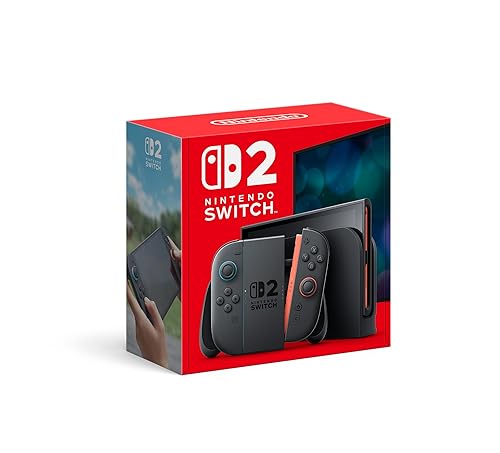
Nintendo Switch 2
The Switch 2 does not compete on raw specs, and it does not need to. It is the only way to play Nintendo's first-party games, it is the easiest handheld to hand a kid, and its detachable-controller, dock-to-TV flexibility remains genuinely unmatched. For a lot of households that is the entire decision.
The timing note matters here: Nintendo has announced an increase to $499.99 effective September 1, 2026, so buying before that date saves you $50. On battery, we will stick to Nintendo's own official estimate of roughly 2 to 6.5 hours depending on the game—demanding titles sit at the low end. If you see claims of 9+ hours, ignore them. Bundle pricing does surface periodically; 9to5Toys is a reasonable place to watch for Switch 2 bundle deals.
 Click to zoom
Lenovo Legion Go S (SteamOS)
If the Steam Deck's software is what you want but you would rather have a bigger canvas, the SteamOS configuration of the Legion Go S is the pick. You get an 8-inch 120Hz IPS touchscreen—noticeably roomier than the Deck—driven by AMD's Ryzen Z2 Go, in a 16GB/1TB SteamOS build. Running SteamOS rather than Windows sidesteps most of the friction we flag on the Ally X.
The problem is money, and it is not Lenovo's alone. This model launched around $499–$599, but 2026 street prices have swung to roughly $713–$900 on the back of the same memory-cost surge hitting the whole category (see the nerd box below). We are not going to quote you a single confident price on a device whose sticker has been this unstable—check the live listing before you commit.
The 2026 memory-price surge, and why buy windows matter
If the prices above feel higher than the handhelds you remember, you are not imagining it. Through 2026, a memory-price surge—driven largely by AI datacenter demand for DRAM and NAND—has pushed component costs up across the entire industry, and handhelds, which are basically small PCs stuffed with RAM and fast storage, took the hit directly.
You can see it in the moves: Valve raised the Steam Deck OLED by as much as $300, Lenovo's Legion Go S street price ballooned well past its launch range, and Nintendo is bumping the Switch 2 by $50 on September 1. None of these are one-off vendor decisions; they are the same macro pressure showing up in four different places.
The practical takeaway: the era of cheap handhelds is paused, not gone, but for now timing is a feature. If a device you want is priced sanely today—or sitting just below an announced increase, like the Switch 2—that window is worth acting on rather than waiting for a sale that the current supply picture may not deliver.
Compare All Four
| Handheld | Display | Chip | Storage | Battery (reported) | Price (July 2026) |
|---|---|---|---|---|---|
| Steam Deck OLED #1 Overall |
7.4" OLED, 90Hz | Custom AMD (Zen 2/RDNA 2) | 512GB / 1TB | Varies by title; heavier games in the low hours (owner reports) | $789 / $949 |
| ROG Xbox Ally X #2 Performance |
7" FHD, 120Hz | Ryzen AI Z2 Extreme | 1TB SSD (24GB RAM) | ~3.5 hrs, FHD medium (Engadget) | $999.99 |
| Nintendo Switch 2 #3 Exclusives |
LCD, dockable | Custom Nvidia | Internal + expandable | ~2–6.5 hrs (Nintendo estimate) | $449.99 → $499.99 Sept 1 |
| Legion Go S (SteamOS) #4 Big screen |
8" IPS, 120Hz | Ryzen Z2 Go | 1TB (16GB RAM) | Reported mixed; no reliable single figure | Volatile ~$713–$900 |
Figures attributed to independent testing by Engadget and to manufacturer estimates as noted; prices as of July 2026 and subject to change. Ranking context informed by Windows Central and Notebookcheck.
Bottom Line
For most people, the Steam Deck OLED is still the pick, price hike and all—the software experience is worth it and nothing else in the category matches its ease of use. Want the most frames and you already pay for Game Pass? The ROG Xbox Ally X is the fastest here, provided you accept Windows and roughly 3.5 hours of battery in demanding games. Buying for a family, or you just want Mario and Zelda? Get the Switch 2—and before September 1 to save $50. And if you love SteamOS but want a bigger screen, the Legion Go S (SteamOS) delivers, as long as you check its volatile price first. Whatever you choose in 2026, watch the price: the memory surge means the right buy window is doing a lot of the work.